

A child with ADHD usually won’t eat breakfast for one of four reasons: their body is not awake enough to feel hungry yet, their hunger signals are quiet or late, their medication is turning appetite down, or the food and the rush are too much for their senses before 8am. None of those is fixed by pressure. What works is smaller, protein-forward food offered at the right moment, with the decision made the night before and the fight taken out of the kitchen.
If you have typed “ADHD child won’t eat breakfast” into your phone while scraping another full bowl into the bin, you are not doing anything wrong. You are feeding a child whose body runs on a different clock. Breakfast is one of the battles covered in our complete guide to ADHD routines for parents; this post goes deep on that one meal.
Why a child with ADHD won’t eat breakfast
The short answer is that the signal to eat is not arriving on time. A child with ADHD can eat well at other times and still have no appetite at all between waking and the school bell. Here is what is usually underneath it.
Their body has not caught up with the clock
Many children with ADHD wake slowly and stay foggy and low-arousal for the first half hour. Appetite belongs to that same nervous system, so a child who is still half asleep is usually a child who is not hungry. If the wake-up itself is a daily fight, start with how to wake up a child with ADHD without starting the day in a fight.
Their hunger signals are quiet or late
Noticing what is happening inside your own body (hunger, thirst, a full bladder) is called interoception, and it is one of the most common hidden reasons a child “never feels hungry” until they are suddenly starving and furious. Clinical psychologist Roberto Olivardia writes for CHADD that people with ADHD tend to be more externally oriented, which leaves them less attuned to internal cues, including hunger and fullness (Interoceptive Awareness and ADHD, CHADD). A child like this is not refusing food. They cannot feel the reason to eat it.
Medication is turning appetite down
If your child takes stimulant medication, this is very likely part of the picture. The American Academy of Pediatrics lists decreased appetite and weight loss as the most common side effect of stimulants, and says that most side effects can be eased by adjusting the dose or the schedule, which is a decision for your child’s doctor (HealthyChildren.org, AAP). In the UK, NICE guideline NG87 requires height and weight to be monitored while a child takes ADHD medication, so your prescriber expects this conversation. Please never change the timing or dose yourself; raise it at the next review, or sooner if you are worried.
The food, the smell and the rush are too much
Breakfast arrives at the worst sensory moment of the day. A sensitive child can be put off by the smell of toast, the texture of soggy cereal, a sibling chewing, or simply being hurried. Add “eat, we’re late” every ninety seconds and the body shifts into stress mode, which suppresses appetite further. If textures and smells are a battle at every meal, our guide to ADHD sensory issues in children explains what is going on and what helps.
Should I force my child to eat breakfast?
No. Forcing, bribing or standing over a child with ADHD until the plate is clear produces less eating over time, not more, and loads the start of the school day with conflict. Dr Olivardia’s advice in ADDitude’s guide to picky eaters with ADHD is blunt: do not force your child to eat, do not bribe with food, and avoid the power struggle. An NHS parent leaflet on breakfast and ADHD puts the goal more gently: getting your child to eat something is what counts (Breakfast and ADHD, Royal Wolverhampton NHS Trust).
So the aim changes: not “a proper breakfast at the table”, but “some protein and some energy, somewhere between waking and the first lesson”. Put the bar there and most children with ADHD clear it.
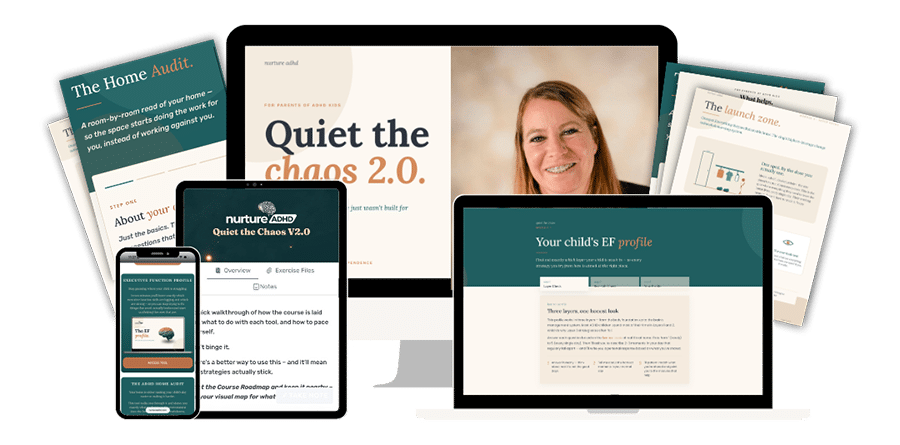
Repeating, reminding, rescuing. And still running late?
The School Survival Guide is included free until 27 November.
How to get a child with ADHD to eat something before school
Move breakfast to the moment the body is ready for it, make it smaller and higher in protein, take the decision out of the morning, and let it travel if it has to. Together, these small changes usually turn a daily refusal into a child who eats without being asked.
Offer food twenty minutes after waking, not immediately
Wake your child, let the light in, and get two minutes of movement first: a few jumps, a crawl down the stairs, a firm hug or a wheelbarrow walk to the bathroom. Movement and deep pressure bring a sluggish nervous system up to the level where hunger can register. Then offer food. For many families this one shift, from food at minute one to food at minute twenty, is the whole fix.
Shrink it and put protein first
A full bowl is a visual demand a child with ADHD will often refuse on sight; half the amount on a small plate reads as doable. Lead with protein and pair it with a slow carbohydrate: egg on toast, cheese and crackers, peanut butter on a wrap, yoghurt with oats, or a milk and nut butter smoothie. CHADD’s experts agree: Dr Marianne Glanzman says protein with carbohydrate is best for sustained cognitive performance over several hours, and Dr L. Eugene Arnold suggests a protein-rich, low-sugar breakfast for children on medication, eaten before the day’s dose takes effect (Encourage Healthy Eating Even When Your Child’s Appetite Is Low, CHADD, updated May 2026). Whether your child should eat before or after their medication is a question for the prescriber, because it depends on the medicine; ask it at the next appointment.
Decide the night before, and keep the same two options
Mornings are the worst time to ask a child with ADHD to make a choice. Offer two breakfasts that are always available, decided together at bedtime, and keep them the same all week. No new foods in the morning; those belong at weekend lunch when nobody is rushing. Put breakfast in the same spot in the sequence every day (toilet, dressed, breakfast, teeth, bag, shoes) so it becomes part of the chain rather than a negotiation. Our guide to ADHD routine charts your child will actually use shows how to build a visual sequence that includes breakfast without you having to say the word.
Let breakfast travel
If your child is not hungry until they are halfway to school, meet them there. A wrap in the car, a cheese stick and a banana on the walk, or a planned “second breakfast” at morning break all count. Ask the class teacher about a snack at first break; most schools agree once they understand why, and it can be written into a 504 plan or IEP in the US, or SEN support in the UK, if appetite is a known medication effect.
| What usually happens | What helps instead |
|---|---|
| Food on the table the moment they wake | Movement first, food at twenty minutes |
| A full bowl of cereal | Half a plate, protein first |
| “What do you want?” at 7:30 | Two options, chosen at bedtime |
| “Eat, we’re late” every minute | Sit down too, say less, use a visual timer |
| Breakfast or nothing | Breakfast in the car or at first break |
Try this tomorrow morning
Tonight, pick the two breakfasts with your child and put the non-perishable parts out on the counter. Then tomorrow:
- Wake your child gently and open the curtains. Do two minutes of movement before anything else.
- Put a small plate in their usual spot without comment and sit down with your own cup; a parent who is sitting is not hovering.
- Say one thing: “Breakfast is here. The bus goes in twenty minutes.” Then say nothing more about food.
- If half is eaten, that is a win. If none is eaten, pack the travel version and let it go, with no lecture.
- Notice when your child is hungriest (straight after school and at bedtime are common) and make those the bigger meals.
When to talk to your child’s doctor
A missed breakfast on a school morning is common and manageable. Book an appointment if your child is losing weight or dropping down their growth chart, if refusal is spreading from breakfast to most meals, if there is pain, nausea or vomiting around food, or if eating is becoming a source of anxiety. If your child takes medication, bring a week’s note of what they ate and when; that is exactly what a prescriber needs.
Frequently asked questions
Is it OK for my ADHD child to skip breakfast?
Occasionally, yes, and it is far better than a daily fight. Over time, though, it is worth getting something in. A review in Frontiers in Human Neuroscience found a mainly positive effect of breakfast on on-task behaviour in the classroom, with the clearest effects in undernourished children (Adolphus, Lawton and Dye, 2013). For a child with ADHD, a small protein breakfast is a cheap way to make 9am to 11am easier.
What is a good breakfast for a child with ADHD who isn’t hungry?
Small, protein-forward and familiar: eggs, cheese, yoghurt, nut butter, baked beans or a milk-based smoothie, with wholegrain toast, oats or fruit. The NHS leaflet above suggests quick options such as eggy bread, cereal with chopped fruit and sandwiches made the night before, and advises avoiding sugary cereals that spike and crash, while noting that if that is all your child will eat, eating something matters more.
My ADHD child won’t eat breakfast since starting medication. What should I do?
Tell the prescriber. Reduced appetite is the most commonly reported stimulant side effect, and the doctor can look at timing, dose and type of medicine, none of which you should change on your own. At home, offer the biggest meals before the dose takes effect or after it wears off, and keep protein-rich snacks ready for when hunger returns.
How Nurture ADHD helps
Breakfast is rarely a food problem. It is a timing, regulation and routine problem, and those can be built. If every part of the morning feels like this, Quiet the Chaos walks you through building a morning routine that does the remembering for your child, from wake-up to the front door, with breakfast placed where their body is actually ready for it. If you want a single page to start with tonight, the free ADHD Routine Checklist gives you the morning sequence to stick on the fridge.
Repeating, reminding, rescuing. And still running late?
The School Survival Guide is included free until 27 November.
Written by Tarryn Poulton, paediatric occupational therapist (BSc OT, University of the Witwatersrand, Sensory Integration trained), founder of Nurture ADHD and mom to a child with ADHD, based on more than 10 years of clinical work with children with ADHD and their families. This is general information, not medical advice; please speak to your child’s doctor about diagnosis and treatment.